
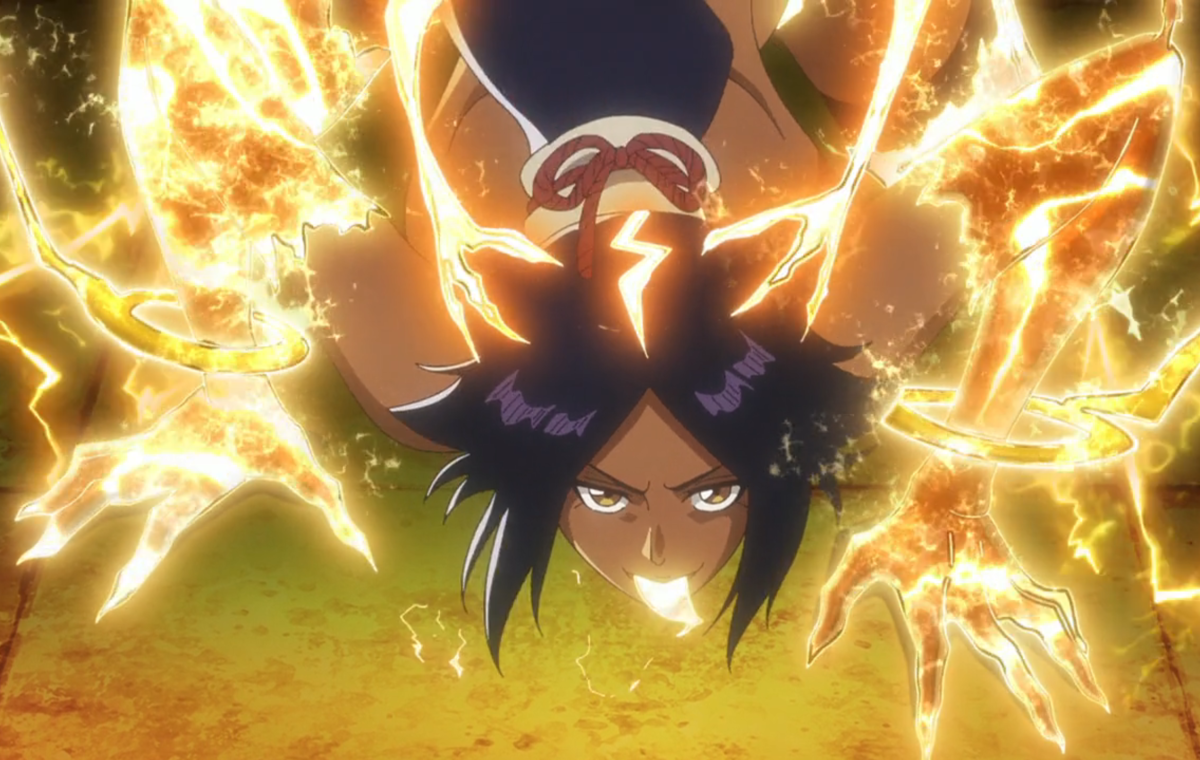

BLEACH: Thousand-Year Blood War has entered its final stage, and The Calamity wastes little time returning viewers to the battles left unresolved at the end of Part 3.
The premiere is not the explosive season opener some viewers may have expected. Instead, it works as a transition into the anime’s last group of confrontations, reorganizing the remaining fighters before giving most of its attention to Uryu Ishida and Yoruichi Shihōin.
That measured approach produces an episode with several memorable visual moments, although its animation and pacing are not equally strong throughout.
Yhwach’s Nightmare Sets an Ominous Tone
The episode opens with an unusual vision in which Yhwach encounters Ichigo and is struck down by him.
The sequence immediately creates uncertainty because Yhwach is not shown relying on The Almighty, while Ichigo appears with an older version of his clothing and Zanpakuto. The scene was positioned differently in the original manga, making its placement at the beginning of the premiere a deliberate adaptation choice.
Rather than explaining the meaning of the dream, the anime allows the imagery and abrupt changes in sound to establish a sense of unease. Yhwach has spent much of the arc appearing almost impossible to surprise, so seeing him confronted with a vision of his own defeat gives the opening real narrative weight.
The episode then provides a brief overview of the battlefield instead of using a lengthy recap. Characters are quickly returned to their respective positions, allowing the story to continue almost immediately from the conclusion of The Conflict.
This is a more effective choice than dedicating the premiere to summarizing previous events. The audience receives enough information to remember where the major characters are without losing an entire episode to material that has already been shown.
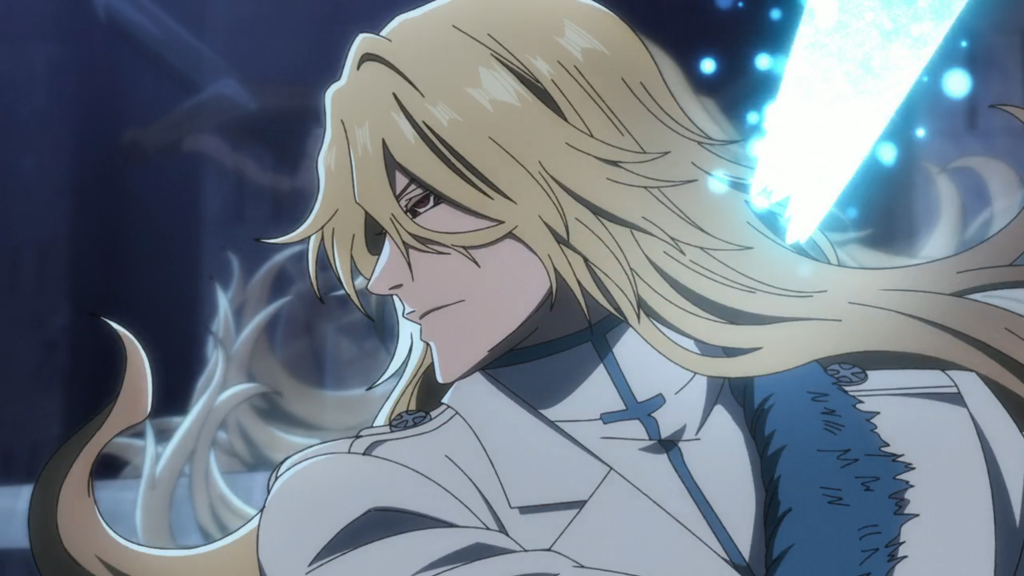
Ichigo Places His Trust in Uryu
One of the premiere’s most important character moments comes when Ichigo accepts Uryu’s decision to face Jugram Haschwalth alone.
Their exchange is brief, but it confirms that Ichigo now understands his friend’s intentions. Instead of questioning Uryu’s loyalty or attempting to take control of the situation, Ichigo leaves Haschwalth to him and continues toward Yhwach with Orihime. Chad remains behind to deal with another obstacle on their route.
The scene gives Uryu something he rarely received during the manga’s final stretch: clear acknowledgment from Ichigo before entering one of his most important battles.
It also preserves the emotional foundation of their relationship. Their opposing positions within the war created the appearance of betrayal, but Ichigo’s reaction makes it clear that their trust has survived everything that happened between them.
Uryu and Haschwalth Finally Begin Their Fight
The confrontation between Uryu and Haschwalth includes an expanded action sequence created for the anime.
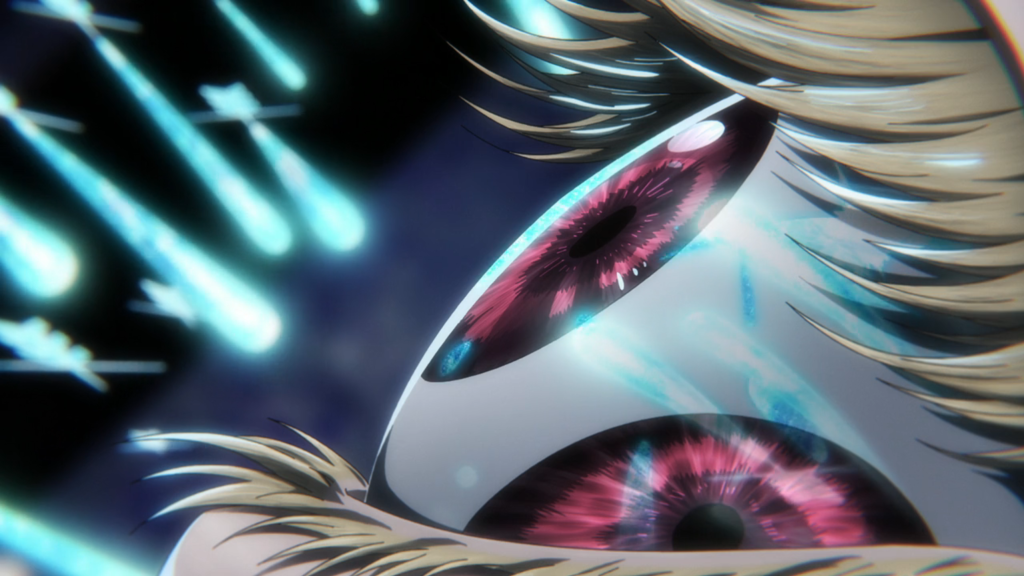
Haschwalth, temporarily possessing Yhwach’s version of The Almighty, repeatedly avoids Uryu’s arrows and constructed attacks. His smooth movements and fading afterimages effectively communicate how difficult it is to strike an opponent capable of observing possible futures.
Uryu also benefits from the expanded presentation of his Quincy abilities. The anime has consistently given him more combat material than the manga did during this portion of the story, and the premiere continues that improvement.
Unfortunately, the visual execution is inconsistent.
Haschwalth’s movement is often fluid, but some of Uryu’s projectiles appear overly artificial and lack the physical impact expected from a major confrontation. The distance between the two fighters also makes parts of the battle feel less immediate than Uryu’s earlier clash with Ichigo.
The scene becomes stronger toward its conclusion, suggesting that the production concentrated its resources on selected moments rather than maintaining the same quality throughout the entire encounter.
Even with those weaknesses, the anime-original material is valuable. Uryu and Haschwalth represent sharply different responses to loyalty, sacrifice and service to Yhwach, so their battle deserves more attention than it originally received.
Askin Controls the Episode’s Pace
The other half of the premiere returns to Askin Nakk Le Vaar’s confrontation with Yoruichi, Yushiro and Kisuke Urahara.
Askin remains one of the most entertaining members of the Schutzstaffel because his relaxed personality contrasts with the danger of his abilities. His sarcastic delivery and apparent unwillingness to take anything seriously make him feel unpredictable even when he is explaining how his power works.
The episode spends considerable time on conversation before the fighting resumes. Askin discusses Yhwach’s designated Special War Powers, while his exchanges with Yoruichi delay the physical confrontation. This material closely follows the manga and preserves some of the same pacing problems.
The dialogue is relevant, but its placement makes the middle of the episode feel slower than necessary. After the ominous opening and the beginning of Uryu’s battle, the extended explanation temporarily reduces the premiere’s momentum.
Once the hand-to-hand combat starts, however, the episode becomes much more energetic.
Yoruichi Delivers the Premiere’s Visual Highlight
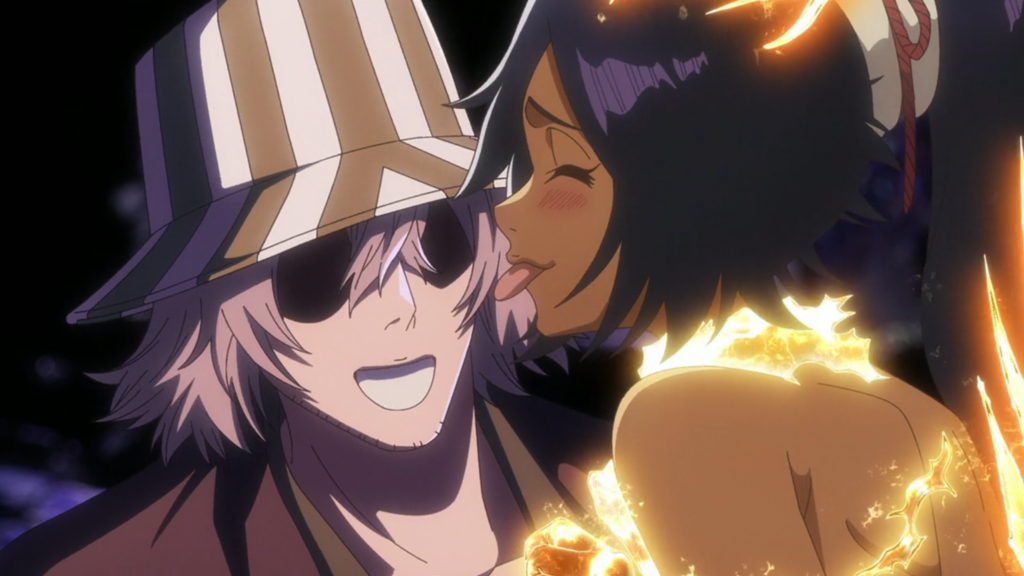
Yoruichi’s transformation into her Thunderous Black Cat Battle Princess form is clearly intended to be the episode’s major spectacle.
The transformation combines her Shunko techniques with the feline qualities long associated with her character. Lightning constantly moves across her body as she attacks Askin with rapid punches, claws and unpredictable changes in spiritual pressure.
This sequence makes excellent use of one of Thousand-Year Blood War’s greatest visual strengths: dramatic lighting.
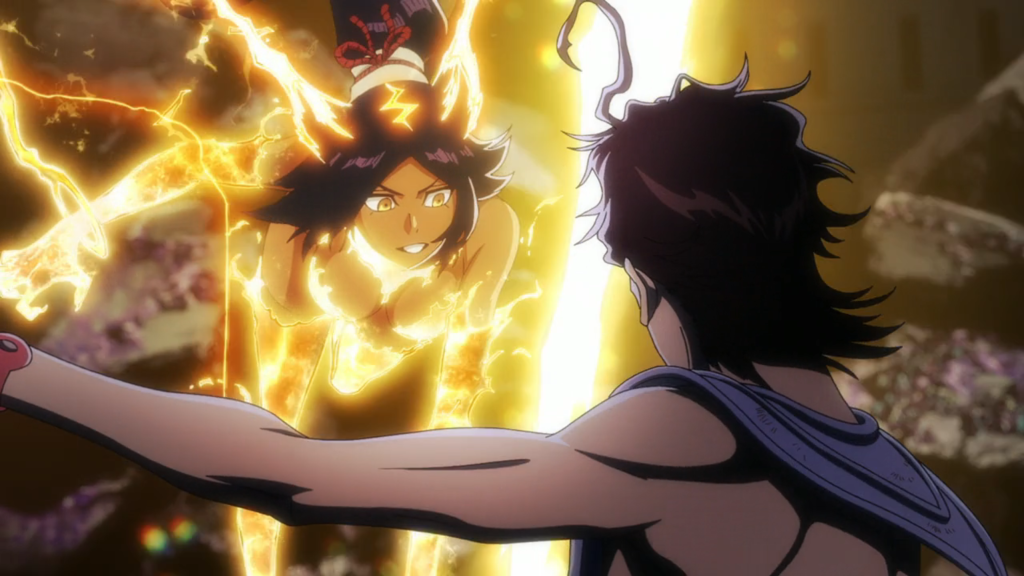
The bright electrical effects stand out against the darker environment, while the animation allows several of Yoruichi’s attacks to connect visibly instead of cutting away before impact. Her movements feel aggressive and almost animalistic, presenting a style of combat very different from the controlled confidence she usually displays.
The transformation is visually impressive, but its presentation remains uncomfortable in places.
Yoruichi’s strongest form removes much of her control over her own behavior and is staged with heavy sexualized comedy involving Urahara. Those decisions distract from what should be an important demonstration of her power. The anime improves the spectacle of the scene, but it does not resolve the underlying problems inherited from the manga.
Even so, her battle is the premiere’s strongest action sequence. Its color, speed and lighting give the episode the striking visual identity that the earlier Uryu confrontation only achieves intermittently.
A Setup Episode Rather Than a Major Event
Episode 1 adapts approximately three manga chapters, leaving considerable space for the final cour to expand the remaining material. Hulu Support has confirmed that The Calamity contains 10 episodes, while roughly 25 manga chapters remained to be adapted when the cour began.
That pacing creates an important opportunity.
Previous parts of Thousand-Year Blood War have already added new battles, extended character moments and additional background material developed with Tite Kubo’s involvement. The final cour now has enough room to strengthen confrontations and explanations that moved too quickly in the manga.
The premiere’s expanded Uryu sequence demonstrates how valuable that approach can be, even when the animation itself is not consistently exceptional.
Rather than rushing toward Ichigo and Yhwach’s final confrontation, the episode allows the remaining supporting characters to complete their own battles. That decision should make the eventual climax feel more earned.
Final Verdict
The opening episode of The Calamity is a respectable beginning, but not one of Thousand-Year Blood War’s strongest premieres.
Its most successful decisions involve structure and character. Yhwach’s nightmare creates immediate tension, Ichigo’s trust gives Uryu’s battle greater emotional importance, and the anime-original material provides Uryu with a more active role.
Yoruichi’s transformation supplies the episode’s most memorable imagery, supported by dynamic lightning effects and forceful close-range combat. At the same time, the scene’s fanservice-heavy presentation weakens some of its dramatic impact.
The uneven animation during Uryu’s fight and the extended conversation surrounding Askin prevent the episode from maintaining consistent momentum. It frequently looks impressive, but the quality is concentrated in particular shots rather than sustained across the entire premiere.
Still, the episode succeeds at its most important task: placing the remaining characters on the path toward the final battle while showing that the anime intends to continue expanding the manga’s conclusion.
The Calamity has not reached its greatest moments yet. This premiere feels more like the first movement of a larger confrontation than a complete event on its own—and that may ultimately work in the anime’s favor.
BLEACH: Thousand-Year Blood War – The Calamity premiered on July 25, 2026. New episodes stream through Hulu in the United States and Disney+ in international territories.






Comments
Share your opinion and keep the conversation respectful.