
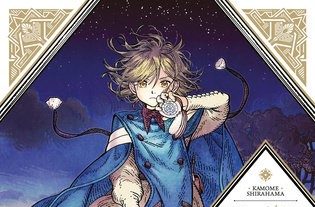

The early volumes of Witch Hat Atelier invite readers into a world where magic resembles art. Spells are drawn rather than spoken, imagination can become a practical tool, and every new lesson gives Coco another reason to believe that wonder can improve people’s lives.
Volumes 9 through 14 preserve that beauty but place it under far greater pressure.
Kamome Shirahama’s lengthy Silver Eve storyline begins as a colorful festival celebrating cooperation between witches and ordinary people. It gradually becomes the manga’s largest political and moral crisis yet, forcing Coco to confront the difference between creating helpful magic and living within a system that decides who deserves access to it.
These six volumes transform Witch Hat Atelier from an exceptional magical-school fantasy into something more ambitious: a story about disability, inequality, institutional power and the uncomfortable question of whether forbidden magic is always wrong simply because those in authority have declared it so.
Silver Eve Brings Every Part of the World Together
Volume 9 takes Coco and her friends to Ezrest for Silver Eve, an annual celebration where witches display magical inventions and ordinary citizens experience their work.
The festival initially captures everything enchanting about Shirahama’s world. Streets are filled with unusual contraptions, elaborate costumes and visitors from across the kingdom. Witches, members of the royal family, the Knights Moralis and the Three Wise all gather in one place, turning Ezrest into a meeting point for nearly every major faction introduced so far.
That concentration of characters gives the arc enormous energy, but it also reveals how carefully magical society controls its public image.
Silver Eve is supposed to demonstrate that witches use their knowledge for everyone’s benefit. In practice, ordinary people are still prevented from learning how magic works. They can purchase its results and admire its beauty, but the method behind it remains restricted to a protected class.
The festival therefore functions as both a celebration and a distraction. It allows people to enjoy the achievements of witches without questioning why they cannot participate in creating those achievements themselves.
Coco notices that contradiction more clearly than most because she once lived as an outsider. She knows that the belief that only certain people are born capable of magic is a deliberate lie. Every smiling visitor at Silver Eve consequently reminds her that an entire population has been denied information that changed her own life.
The Story Treats Accessibility as More Than a Background Theme
Accessibility has always been present in Witch Hat Atelier, particularly through Tartah, Custas and the magical tools designed to assist people with physical limitations.
In these volumes, the subject becomes central to the conflict.
Custas has experienced firsthand how magical inventions can improve a person’s mobility. He has also seen how quickly those benefits disappear when access depends on the generosity and decisions of witches.
From his perspective, Coco and Tartah’s assistance is not enough. They helped temporarily, demonstrated what magic could make possible and then returned to a society where outsiders remain dependent on others for the same support.
His frustration gives the Brimmed Caps’ arguments real force.
They are dangerous, manipulative and willing to use forbidden techniques without accepting responsibility for the consequences. Yet they also identify genuine injustice. Magic could heal, restore mobility and transform daily life, but the Pointed Caps protect their monopoly by claiming that secrecy is necessary for public safety.
Custas becomes compelling because his anger is not irrational. The methods offered to him are alarming, but the system he rejects has already failed him.
Volume 9 Handles Trauma With Unusual Care
One of the most difficult sections of Volume 9 focuses on Luluci and her response to a magical contraption that can be used to look through people’s clothing.
The device brings back memories of sexual abuse she suffered while working as an apprentice. Rather than treating the subject as a shocking plot twist, Shirahama provides a content warning and structures the material so readers can skip the relevant chapter without losing essential story information.
That decision reflects the empathy at the heart of the series.
The chapter does not argue that magic itself is corrupt. It demonstrates that even a playful or apparently harmless invention can become abusive when its creator ignores consent and the ways other people might use it.
This connects directly with the wider arc. Magic cannot be judged only by what its inventor intended. Witches must also consider who controls it, who is placed at risk and whose discomfort is dismissed in the name of curiosity.
The Knights Moralis’ involvement complicates matters further. Their responsibility is to prevent magical harm, but their rigid approach often focuses more on enforcing rules than understanding the people affected by them.
Coco Becomes Trapped Between Two Worlds
Volumes 10 and 11 place Coco in an increasingly impossible position.
Custas returns alongside Ininia, a young witch loyal to the Brimmed Caps. Coco and Tartah are bound to participate in the Silver Eve Procession and must quickly create a spell impressive enough to earn attention from the king. Meanwhile, Coco discovers that Dagda carries the mark of forbidden magic.
Coco cannot tell Qifrey everything without exposing Custas and Dagda to punishment. She also cannot simply ignore the danger surrounding them.
Her secrecy creates one of the arc’s strongest emotional tensions. Earlier in the manga, Coco could usually rely on her teacher and fellow apprentices whenever a problem became too large. Here, the institutions surrounding Qifrey make honesty dangerous.
Coco is not hiding information because she has stopped trusting him as a person. She is afraid of what the magical world will require him to do once he knows the truth.
That distinction matters. The conflict is not built around a convenient misunderstanding that could be solved through one conversation. Coco understands that disclosure may lead to memory erasure, imprisonment or the loss of the very magic that has given Custas hope.
Her dilemma demonstrates how unjust systems damage personal relationships. Even caring teachers become difficult to approach when they also represent institutions capable of punishment.
Agott and Coco’s Partnership Is One of the Arc’s Greatest Rewards
Agott’s development provides a necessary source of hope throughout the increasingly dark storyline.
She began the series as a talented but defensive apprentice who measured her value through recognition. Her initial resentment toward Coco came partly from fear that an inexperienced outsider could effortlessly receive the praise Agott had spent years pursuing.
The Silver Eve Procession shows how much their relationship has changed.
When Coco becomes overwhelmed by the pressure surrounding Custas and Dagda, Agott recognizes her distress. Instead of treating Coco’s weakness as an opportunity to move ahead, she helps her complete the spell they need for the procession.
Their collaboration is more meaningful than a simple friendship milestone.
Coco brings empathy, unconventional thinking and a desire to create magic that helps people. Agott contributes discipline, technical precision and the ability to turn an unfinished idea into something functional. Neither girl must become more like the other for their partnership to succeed.
Their performance also reflects the ideal version of magic that Coco continues to believe in: something created cooperatively, shared openly and designed around human needs rather than personal prestige.
The emotional progress between them makes the later crisis more painful. They have finally created something beautiful together just as the festival begins collapsing around them.
Wonder Gives Way to Horror
Volume 12 delivers the arc’s sharpest tonal change.
Coco and Agott’s procession performance is well received, but the celebration ends when an enormous threat descends on Ezrest. The crowd panics as the Knights Moralis, the Wise Ones and the royal family attempt to prevent the city from being destroyed.
The resulting action is among the most intense material Shirahama has drawn.
Earlier dangers often felt contained within caves, tests or isolated magical spaces. The attack on Ezrest unfolds in a crowded city filled with civilians who do not understand the forces surrounding them.
This changes the scale of responsibility.
The witches can no longer protect their secrets by quietly removing witnesses after a small incident. Their decisions are being tested in front of the same public they claim to protect.
The monstrous valance leeches also give the arc an effective form of body horror. Their designs contrast sharply with the elegant spell diagrams and decorative architecture associated with Silver Eve. The festival’s beauty is invaded by organisms that consume, distort and multiply, turning familiar streets into a hostile environment.
The visual shift does not feel like darkness added only for excitement. It represents the consequences of a magical society that has allowed resentment, secrecy and exploitation to grow beneath its polished surface.
The Brimmed Caps Are Dangerous Because They Are Sometimes Right
Many fantasy stories create a simple moral division between lawful magic and forbidden magic.
Witch Hat Atelier consistently refuses that convenience.
The Brimmed Caps use coercion, deception and dangerous experimentation. Ininia manipulates Coco and Tartah, while other members are willing to place innocent people at risk to challenge the established order.
Their criticism of that order remains difficult to dismiss.
The Pointed Caps ban healing techniques capable of altering the body because such magic was abused in the past. They erase memories to preserve secrecy and restrict knowledge that could radically improve life for outsiders.
These policies emerged from legitimate historical dangers, but the current system treats prohibition as a permanent substitute for solving the underlying problems.
Coco’s position is therefore more complicated than choosing one side.
She rejects the Brimmed Caps’ willingness to harm people, but she can no longer accept the idea that every forbidden technique is automatically immoral. The suffering of Custas and Dagda proves that refusing to use available knowledge can also cause harm.
The arc’s real question is not whether magic should have rules. It is who writes those rules, whose safety they prioritize and whether people affected by them are allowed to participate in the decision.
Qifrey’s Protection Can Become Another Form of Control
Qifrey remains one of the manga’s most fascinating characters because his affection for Coco exists beside his secrecy and personal obsession.
He genuinely wants to protect his students. At the same time, his understanding of protection often involves withholding information and making choices on their behalf.
As Coco becomes more independent, that behavior creates increasing tension.
She is no longer the frightened beginner who entered his atelier after accidentally transforming her mother. She has encountered the Brimmed Caps, seen the effects of forbidden magic and developed her own beliefs about how magical knowledge should be used.
Qifrey still sees the danger surrounding her, but he does not always recognize that preventing Coco from acting can deny her agency.
Volume 13 intensifies this problem after the immediate mastermind behind the attack is subdued. Coco wants to continue searching for Custas, while the adults around her remain focused on controlling risk and repairing the damage in Ezrest. Beldaruit helps her participate without simply ignoring Qifrey’s concerns, but the compromise does not resolve the deeper disagreement.
The relationship remains loving, yet it can no longer return to the simplicity of teacher and obedient student.
Volume 14 Turns Cooperation Into Survival
By Volume 14, Dagda and Custas have finally been reunited inside the medical tower. Their physical proximity should provide relief, but Qifrey senses that the crisis is not over.
Elsewhere, Coco develops a desperate plan to protect Ezrest from the remaining valance leeches. The solution requires the city’s witches to stop acting as isolated experts and combine their abilities on a much larger scale.
This is the natural conclusion to the ideas developed throughout the arc.
Coco has always approached magic collaboratively. She studies other people’s needs, adapts existing spells and believes that creativity becomes more valuable when shared.
The established magical system operates in the opposite direction. Knowledge is divided, ranked and protected. Individual witches are taught to guard techniques and obey authorities above them.
The emergency proves the limitations of that structure. No single powerful spell or respected leader can solve the problem alone. Survival depends on communication between people with different abilities and perspectives.
Coco’s plan is not important merely because it may save the city. It demonstrates an alternative philosophy of magic—one based on collective responsibility instead of controlled access.
Shirahama’s Artwork Remains Extraordinary
The artwork across these volumes continues to justify Witch Hat Atelier’s reputation as one of the most visually accomplished fantasy manga in publication.
Silver Eve allows Shirahama to fill pages with layered costumes, decorated stalls, magical contraptions and architecture that appears to have been designed rather than inserted as background scenery.
The page layouts are equally important.
Panels bend around spell circles, decorative borders guide the reader’s eye, and magical movement often appears to reshape the structure of the page itself. The manga does not simply depict drawn magic; the act of illustration becomes part of how the magic is experienced.
When the attack begins, Shirahama adjusts that visual language.
Orderly compositions become crowded and unstable. The clean geometry of magical diagrams is contrasted against the organic shapes of the valance leeches. Wide festival scenes give way to tightly framed expressions and overwhelming masses of bodies.
The beauty never disappears, but it becomes unsettling.
That combination is essential to the story’s argument. Magic can create extraordinary beauty and terrible harm through the same basic process. The difference lies in intention, access, education and responsibility.
The Large Cast Is Both a Strength and a Weakness
The Silver Eve arc brings together an enormous number of characters and institutions.
This produces a convincing sense that Ezrest is part of a living kingdom rather than a stage created only for Coco. Royals, guards, teachers, apprentices, outsiders and rebellious witches all arrive with separate priorities.
The disadvantage is density.
Some characters disappear for long stretches before returning during crucial scenes. Readers may need to remember titles, relationships and previous conflicts introduced several volumes earlier. The transition between Coco’s personal crisis, political discussions and multiple battles can occasionally weaken the momentum.
Volumes 10 and 11 are particularly deliberate. Much of their value comes from conversation, preparation and emotional tension rather than immediate action. Readers expecting the festival to move quickly toward its central confrontation may find the buildup extended.
The later volumes reverse the problem. Once Ezrest is attacked, events move across several locations and groups so rapidly that smaller emotional developments sometimes receive less space than they deserve.
These issues do not destroy the arc, but they show the challenge of expanding a gentle apprenticeship story into a large political fantasy.
Coco’s Idealism Is Tested Without Being Destroyed
The most satisfying achievement of Volumes 9–14 is that Coco does not lose her belief in magic.
She becomes less naïve about the people who control it, but the story does not argue that maturity requires cynicism.
Coco sees manipulation, institutional hypocrisy and the damage caused by forbidden spells. Her response is not to abandon magic or decide that helping people is impossible.
She asks how it can be used more responsibly.
That distinction separates her from both major factions. The Pointed Caps often defend the present because they fear the past. The Brimmed Caps are willing to create new suffering in order to destroy existing restrictions.
Coco continues searching for a third path.
Her optimism is no longer based on ignorance. It survives after she has understood the danger, making it stronger and more meaningful than it was at the beginning of the series.
Final Verdict
Witch Hat Atelier Volumes 9–14 represent the manga’s most ambitious storyline so far.
The Silver Eve arc begins with magical celebration and gradually exposes the inequality beneath it. Through Custas, Dagda and Luluci, the story examines how institutions fail people who are disabled, vulnerable or excluded from power. Through Coco and Agott, it demonstrates that cooperation can create an alternative to both passive obedience and destructive rebellion.
The pacing occasionally suffers under the size of the cast, and the rapid movement between political ideas, personal trauma and large-scale action can make these volumes demanding to read consecutively.
Nevertheless, the emotional and thematic rewards are considerable.
Shirahama does not reduce the conflict to good witches fighting evil witches. She asks whether knowledge can remain ethical when it is protected from the people who need it most—and whether refusing to use dangerous power can sometimes be as harmful as using it carelessly.
The result is a fantasy arc that remains visually wondrous even as it becomes morally uncomfortable.
Volumes 9–14 prove that Witch Hat Atelier has grown far beyond its enchanting premise. It is now a thoughtful examination of who is allowed to create, who benefits from knowledge and what responsibility truly means in a world where a carefully drawn line can change someone’s life.
Rating: 9/10
Kodansha USA publishes the series in English. Volume 14 was released in print and digital formats on March 17, 2026.




Comments
Share your opinion and keep the conversation respectful.