
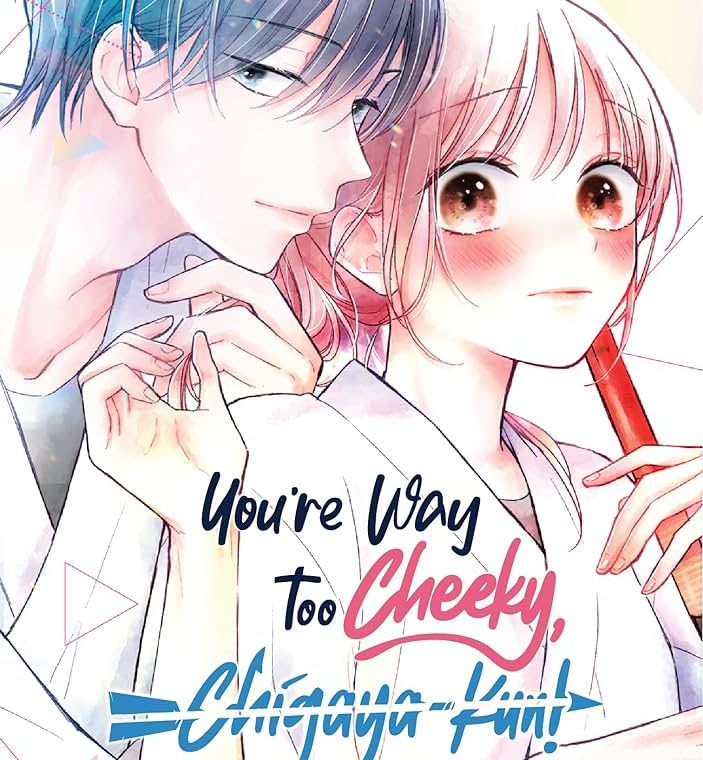

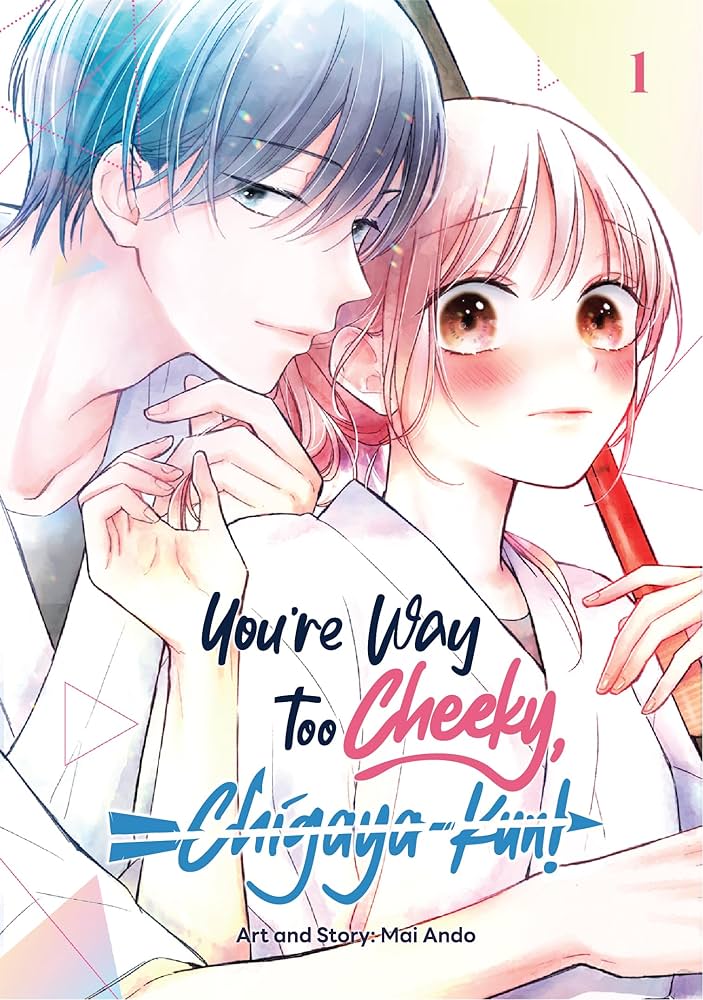
Mai Ando’s You’re Way Too Cheeky, Chigaya-kun! does not arrive with an unfamiliar premise. Its first volume contains many recognizable elements of school romance manga: an easily flustered heroine, a confident younger boy, playful teasing and a relationship that is obvious to nearly everyone except the person standing at its center.
Originality, however, is not always the deciding factor in whether a romantic comedy succeeds. Volume 1 understands the appeal of its familiar setup and delivers it with enough charm, expressive artwork and genuine chemistry to make Natsune and Chigaya immediately enjoyable company.
An Annoying Junior Who Only Teases Her
Natsune is a responsible upperclassman and a member of her school’s archery club. She tries to behave with composure, take her responsibilities seriously and maintain the proper distance between herself and the younger students.
Chigaya makes that almost impossible.
Although he is her junior, he rarely treats Natsune with the respect and restraint she expects. He deliberately provokes her, watches for the exact moment when she becomes embarrassed and repeatedly directs his mischievous attention toward her alone.
Natsune initially interprets his behavior as simple disrespect. From an outside perspective, however, the truth appears much less complicated. Chigaya’s teasing is selective, persistent and accompanied by an interest in Natsune that he does not show toward anyone else.
The first volume builds its romantic tension around the distance between what Natsune believes and what readers can already see. She keeps trying to understand why Chigaya irritates her so much, while his behavior increasingly suggests that annoying her is merely the safest way he has found to remain close.
The official description presents the manga as a school romance between two archers, with Chigaya’s teasing repeatedly catching the normally composed Natsune off guard. Volume 1 collects the first eight chapters of the series.
Natsune Is Easy to Support
A teasing male lead can quickly become exhausting when the heroine exists only to react to him. Fortunately, Natsune has enough personality to prevent that from happening.
She is sincere, hardworking and emotionally transparent, even when she does not fully understand her own feelings. Her exaggerated reactions provide much of the comedy, but the manga does not portray her as foolish or helpless. She can challenge Chigaya, defend other club members and speak up when she believes someone is being treated unfairly.
That sense of integrity is important. Chigaya may control many of their conversations, but Natsune still feels like the emotional center of the story rather than a passive target for his attention.
Her lack of romantic awareness is also believable at this early stage. She notices that Chigaya treats her differently, yet his constant joking gives her a reasonable excuse to doubt his intentions. Accepting that he might genuinely like her would require Natsune to reconsider every irritating exchange they have shared.
Instead, she responds to each incident individually, becoming flustered before convincing herself that his behavior probably means nothing. This pattern is familiar, but Ando handles it with a light touch that makes Natsune’s confusion endearing rather than frustrating.
Chigaya’s Confidence Hides His Immaturity
Chigaya appears to hold the advantage whenever the pair interact. He is observant, bold and remarkably skilled at finding Natsune’s emotional weak points. He understands what will make her blush and rarely misses an opportunity to test that knowledge.
His confidence, however, is not complete.
Whenever Natsune fails to respond as he hoped, Chigaya’s frustration becomes visible. He can become jealous, sulky or unusually determined to regain her attention. These moments reveal the insecurity beneath his controlled smile.
That contrast makes him more appealing than a straightforward, flawless romantic lead. Chigaya may know that he likes Natsune, but he lacks the maturity to communicate his feelings honestly. Teasing allows him to approach her without exposing himself to a direct rejection.
His persistence is strong, though the first volume generally keeps it on the playful side rather than making him feel threatening. He pushes for a reaction but does not erase Natsune’s ability to answer back. Their best scenes feel like an ongoing contest in which both characters are gradually learning the other’s habits.
Archery Gives the Romance Its Identity
The archery club provides the series with more than a decorative background. It creates a natural reason for Natsune and Chigaya to spend time together while reinforcing the manga’s central romantic metaphor.
Chigaya’s comments are repeatedly compared to arrows aimed directly at Natsune’s composure. He observes her, waits for an opening and then delivers precisely the remark most likely to make her lose focus.
The sport also fits both personalities. Archery emphasizes patience, discipline and emotional control—qualities Natsune values and Chigaya constantly disrupts whenever he is near her.
Readers expecting a detailed sports manga may be disappointed, since Volume 1 is primarily concerned with romance rather than technical competition. Archery shapes the setting and some of the character interactions, but it does not overpower the developing relationship.
That balance works well for a shōjo romantic comedy. The club gives the story a recognizable visual and thematic identity without forcing the volume to choose between lengthy sports explanations and character development.
Expressive Art Carries the Comedy
Ando’s artwork is particularly effective when depicting emotional reactions. Natsune’s attempts to appear dignified frequently collapse into embarrassment, irritation or panic, and the visual comedy communicates those shifts immediately.
Chigaya’s expressions are more controlled. A small smile or change in his eyes is often enough to show that he has successfully achieved the reaction he wanted. When his confidence briefly disappears, the contrast becomes even more noticeable.
The character designs are attractive without appearing overly elaborate. Archery uniforms and school settings give the pages a clean visual structure, while close-ups are used to emphasize the physical distance—or sudden lack of it—between the two leads.
The romantic moments are not presented with excessive drama. Instead, Ando relies on glances, pauses and changes in expression to transform simple conversations into scenes charged with meaning.
A Predictable First Volume
The greatest weakness of You’re Way Too Cheeky, Chigaya-kun! is also easy to identify: Volume 1 rarely surprises the reader.
It becomes apparent very early that Chigaya’s behavior is motivated by affection. Natsune remains behind the audience in recognizing that fact, so several chapters follow a similar rhythm. Chigaya approaches, provokes a reaction, moves closer than expected and leaves Natsune wondering why her heart is beating so quickly.
Readers familiar with age-gap school romances involving a younger male lead will recognize most of the emotional beats. The appearance of other interested characters also hints at conventional jealousy and rivalry developments.
The repeated structure is enjoyable because the central chemistry works, but the series will eventually need to move beyond teasing. Chigaya must become more honest, and Natsune must begin confronting what his attention means to her. Without that development, their exchanges could become repetitive.
For now, however, the manga understands that the opening volume’s main task is to make readers want the couple to get together. In that respect, it succeeds.
English Edition and Publication
Mai Ando began publishing the manga through ComicSmart’s GANMA! service on November 27, 2024. The series is categorized as a school romance and romantic comedy and continues with new installments released every other Wednesday.
The first Japanese digital volume was released on June 1, 2025 and contains chapters 1–8. Crossed Hearts licensed the series for English publication and released Volume 1 in May 2026. The English paperback includes an author message created for the edition, while a limited version was also offered with a shikishi art board.
Final Verdict
You’re Way Too Cheeky, Chigaya-kun! Volume 1 is not a reinvention of the school romance manga. Its misunderstandings, teasing junior and easily embarrassed heroine all belong to well-established shōjo traditions.
What gives the volume value is its execution.
Natsune is sincere enough to earn the reader’s support, Chigaya is irritating in an entertaining rather than unpleasant way and their archery-club setting gives the relationship a distinctive framework. Ando’s expressive artwork strengthens both the humor and quieter romantic moments.
The story still needs to demonstrate that it can develop beyond its initial teasing formula. Nevertheless, this opening volume establishes a warm, energetic relationship with plenty of room to grow.
Readers looking for an intense sports drama or an unpredictable romance may find it too conventional. Those in the mood for a lighthearted shōjo story featuring a cheeky younger boy and an honest heroine, however, will find that this first volume lands comfortably near the center of its target.



Comments
Share your opinion and keep the conversation respectful.