
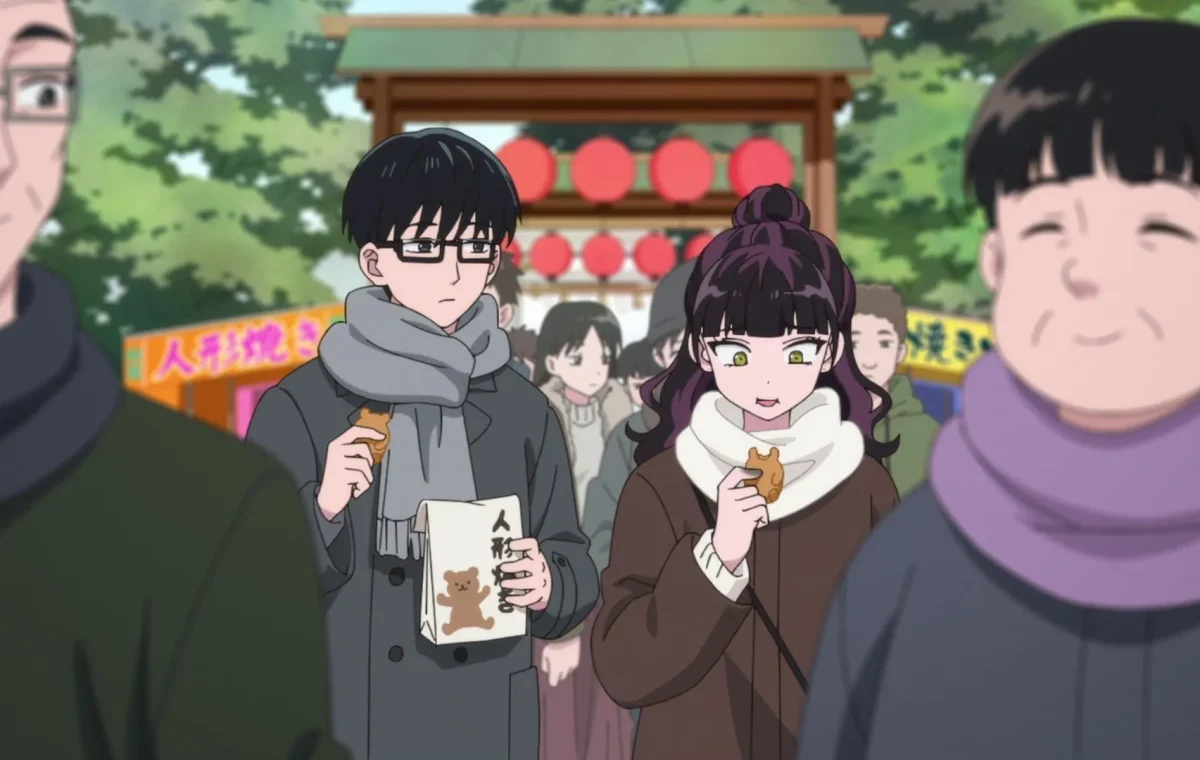

You and I Are Polar Opposites Season 2 Episode 4 moves the main couple away from the center and gives the supporting cast one of the anime’s warmest and most emotionally revealing episodes so far.
Officially titled “New Term,” the episode begins with Nishi returning to her responsibilities as a student librarian. Her calm routine changes when Yamada appears, immediately bringing back all the feelings she spent the winter break trying to understand. With encouragement from Honda, Nishi is finally forced to admit that what she feels for Yamada is no longer ordinary friendship. The episode aired in Japan on July 26 as the anime’s 16th installment overall.
However, Nishi and Yamada are only part of the story. The episode also offers meaningful progress for Taira and Azuma while revealing the origins of Nishi’s friendship with Honda. By connecting three different relationships, “New Term” demonstrates once again that this series understands intimacy is not limited to romance.
Nishi Can No Longer Hide Behind Friendship
Nishi’s relationship with Yamada has always developed through small, awkward encounters rather than dramatic declarations.
She enjoys his company and reacts strongly whenever he pays attention to her, but her anxiety encourages her to reinterpret every romantic feeling as something safer. Yamada’s arrival at the library immediately disrupts that fragile denial.
Suzuki quietly helps create an opportunity for them to spend time together, showing how invested she has become in her friends’ relationship. Tani eventually realizes that Nishi is the girl Yamada likes, and the silent understanding he shares with Suzuki is a charming reminder of how far the central couple has progressed. They can now communicate almost without speaking and know when a friend’s private feelings should remain protected.
The episode’s most significant romantic detail comes when Yamada and Nishi begin addressing each other more personally. In a series where names often reflect emotional distance, this seemingly simple change carries considerable weight.
Yamada finds a playful reason to repeat Nishi’s full name, but the humor does not erase the intimacy of the moment. Nishi is overwhelmed because she understands that their relationship is becoming different, even though neither of them has formally confessed.
Later, she finally tells Honda the truth she has been avoiding: she loves Yamada and wants to become his girlfriend. It is not yet a confession delivered directly to him, but it is still an important breakthrough. Nishi cannot move forward until she first becomes honest with herself.
Honda Becomes the Episode’s Most Important Character
Until this point, Honda has mainly served as Nishi’s observant and unusually direct friend.
She frequently recognizes romantic developments before Nishi does and offers practical advice without making a situation unnecessarily complicated. Episode 4 reveals that this detached attitude did not come from natural confidence. It developed after several disappointing experiences with other people.
Honda had become uncomfortable with classmates approaching her, sharing their insecurities and then blaming her when she gave advice they did not want to hear. Those encounters taught her that becoming involved in another person’s problems often created more frustration than friendship.
Her first impression of Nishi was therefore not especially positive.
Nishi was nervous, persistent and difficult for Honda to understand. Yet Nishi responded differently from the people Honda had previously encountered. Instead of using Honda as a place to unload her emotions, she reflected on her own behavior and sincerely tried to understand where she might have gone wrong.
That honesty gradually weakened Honda’s defenses.
The flashback transforms their friendship from a familiar “confident extrovert adopts a shy introvert” relationship into something more interesting. Nishi may appear to be the person who needed help, but she was also the one who patiently taught Honda that closeness did not always lead to emotional exhaustion.
Honda’s decision to push Nishi toward Yamada consequently feels more meaningful. She is not interfering simply because she enjoys romance. She recognizes that Nishi once helped her trust another person, and now she refuses to let her friend settle for a relationship that leaves her true feelings unspoken.
Her blunt reaction when Nishi suggests remaining friends gives the episode one of its funniest moments, but the concern beneath it is completely genuine.
Taira and Azuma Deliver the Emotional Highlight
Although Nishi’s realization drives the main plot, the episode’s most affecting material belongs to Taira.
The opening examination of his morning routine quietly illustrates how deeply social anxiety shapes his daily life. He goes out of his way to avoid crowded places, chooses less convenient routes and treats isolation as a practical solution rather than something unusual.
What makes the sequence effective is that Taira barely recognizes how much effort he spends avoiding other people. His behavior has become automatic.
That begins to change because of Azuma.
Taira adjusts his routine and moves toward a busier platform where he might encounter her. The decision looks insignificant from the outside, but for him it represents a conscious step away from the habits that previously made him feel safe.
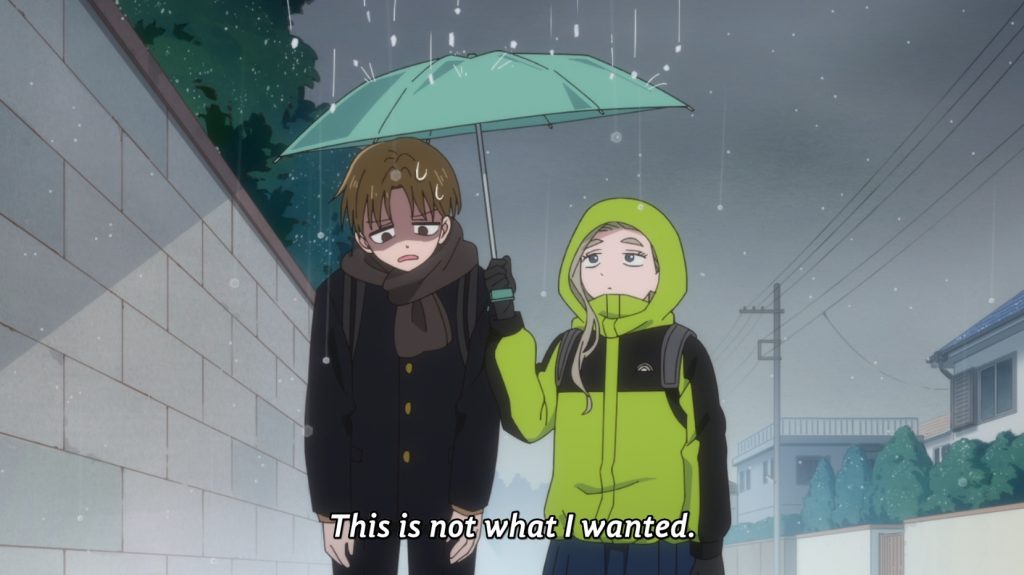
When the weather suddenly turns into hail, Azuma runs after him with an umbrella. The umbrella does not survive for long, yet the gesture matters more than whether it successfully protects them.
Taira has spent so much time assuming that Azuma only tolerates him—or that her kindness must have another explanation—that he has failed to consider the simplest possibility: she genuinely sees him as a friend and wants to be near him.
His realization does not produce a large romantic speech. Instead, the emotion reaches him later, when tears quietly begin forming.
That restraint makes the scene especially powerful.
Taira’s problem is not merely that he has difficulty recognizing Azuma’s possible romantic interest. His deeper struggle is believing that he can stand beside someone else as an equal. Azuma treats their friendship as something completely natural, while Taira experiences that acceptance as a revelation.
Their relationship remains a slow burn, but the deliberate pace suits them. Azuma tends to undervalue her own emotions, while Taira analyzes himself until every possibility becomes negative. They are not ready to date simply because viewers can see their compatibility. They must first change the ways they understand themselves.
Suzuki and Tani Have Become the Supporting Couple
One of the episode’s smartest decisions is allowing Suzuki and Tani to operate mainly as observers.
Their romance once depended on Suzuki finding the courage to communicate and Tani learning how to express affection. They are now stable enough to help other characters navigate similar uncertainty.
Suzuki’s attempt to create a natural library encounter is anything but natural, providing some of the episode’s most exaggerated visual comedy. Her dramatic entrance, suspicious exit and increasingly strange facial reactions prevent the emotional material from making the episode too heavy.
Tani offers the opposite type of humor. His delayed realization about Yamada and Nishi shows that he still does not instinctively read romantic situations the way Suzuki does. Once he understands, however, he immediately respects their privacy.
Their contrasting reactions preserve the central premise of the series. Suzuki is socially perceptive but prone to overacting, while Tani is understated and occasionally slow to notice what is happening around him. Rather than creating conflict, those differences now allow them to work together.
The episode also preserves Suzuki’s darker pink hair following her temporary dye job in the previous installment. It is a minor continuity detail, but it supports the anime’s broader commitment to letting character experiences leave visible traces instead of resetting everything between episodes.
The Episode Understands That Friendship Can Be Transformative
“New Term” is technically a romance episode, but its strongest theme is the effect people can have on one another without realizing it.
Nishi changed Honda by continuing to approach her with sincerity.
Azuma changed Taira by treating their friendship as obvious rather than something he needed to earn.
Suzuki and Tani have changed enough through their own relationship that they can now recognize and support the feelings developing around them.
These connections do not rely on grand sacrifices. They grow through library visits, shared commutes, private conversations and someone running through bad weather with an umbrella.
That ordinary quality is one of the series’ greatest strengths. Its characters rarely deliver perfectly prepared speeches explaining how they have changed. Progress appears in their behavior before they fully understand it themselves.
Animation and Presentation
Lapin Track continues to prioritize facial acting and body language over elaborate movement. That approach is perfectly suited to an episode built around embarrassment, hesitation and realization.
Nishi’s nervous pauses communicate feelings she is not yet ready to state. Honda’s controlled expressions make the gradual reveal of her vulnerability more effective, while Taira’s quiet tears avoid turning his breakthrough into melodrama.
The anime’s visual comedy also remains strong. Suzuki can shift from a believable teenager to an almost abstract creature whenever her plans become too exciting or embarrassing. Those transformations give the episode energy without undermining its more serious moments.
The official production remains led by director Takakazu Nagatomo, series composer Teruko Utsumi and animation studio Lapin Track, with tofubeats composing the music.
Final Verdict
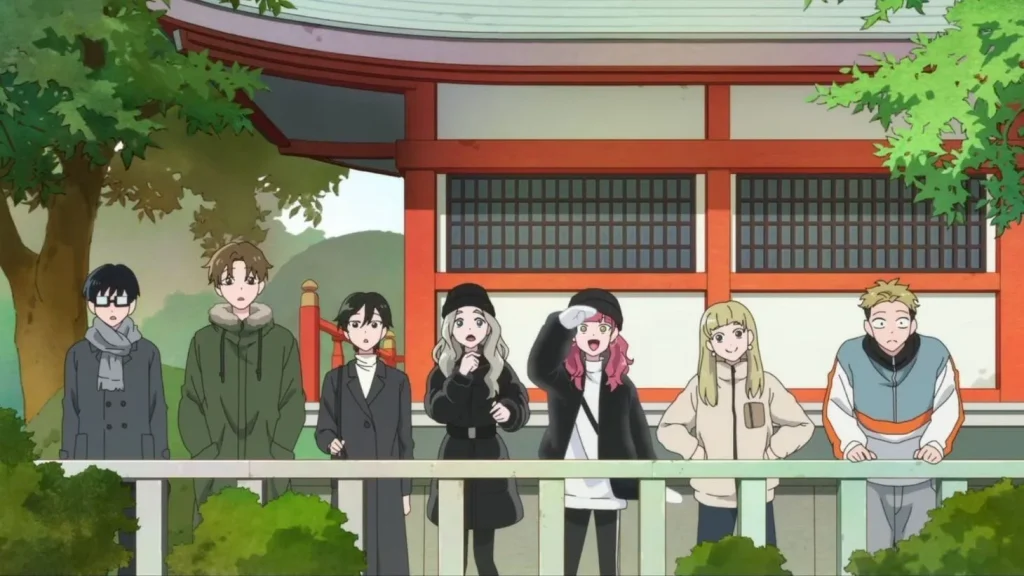
You and I Are Polar Opposites Season 2 Episode 4 is one of the anime’s best demonstrations of ensemble storytelling.
Nishi’s acceptance of her feelings gives her relationship with Yamada a clear direction without rushing directly into a confession. Honda’s backstory turns an already entertaining supporting character into someone far more complex, while her friendship with Nishi becomes one of the episode’s most touching relationships.
Taira and Azuma provide the emotional peak. Their shared umbrella and Taira’s later tears show how meaningful ordinary acceptance can become for someone who has spent years expecting rejection.
The episode advances two potential couples, deepens an important friendship and still finds room for Suzuki and Tani’s effortless comedy. Nothing about “New Term” is especially dramatic on the surface, but that is precisely why it works.
The characters do not suddenly transform. They simply understand themselves—and one another—a little better than they did yesterday.
Rating: 8.5/10









Comments
Share your opinion and keep the conversation respectful.